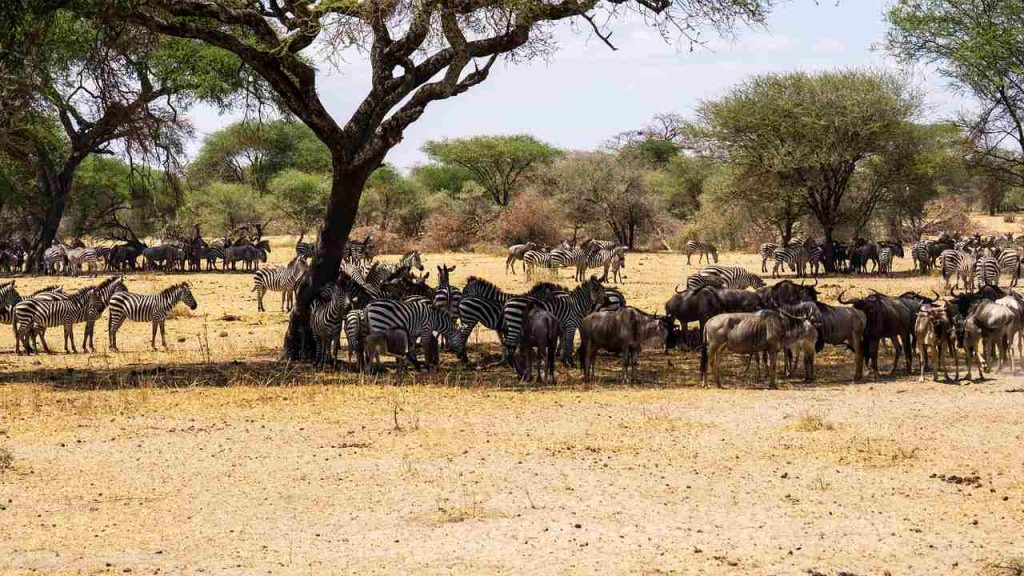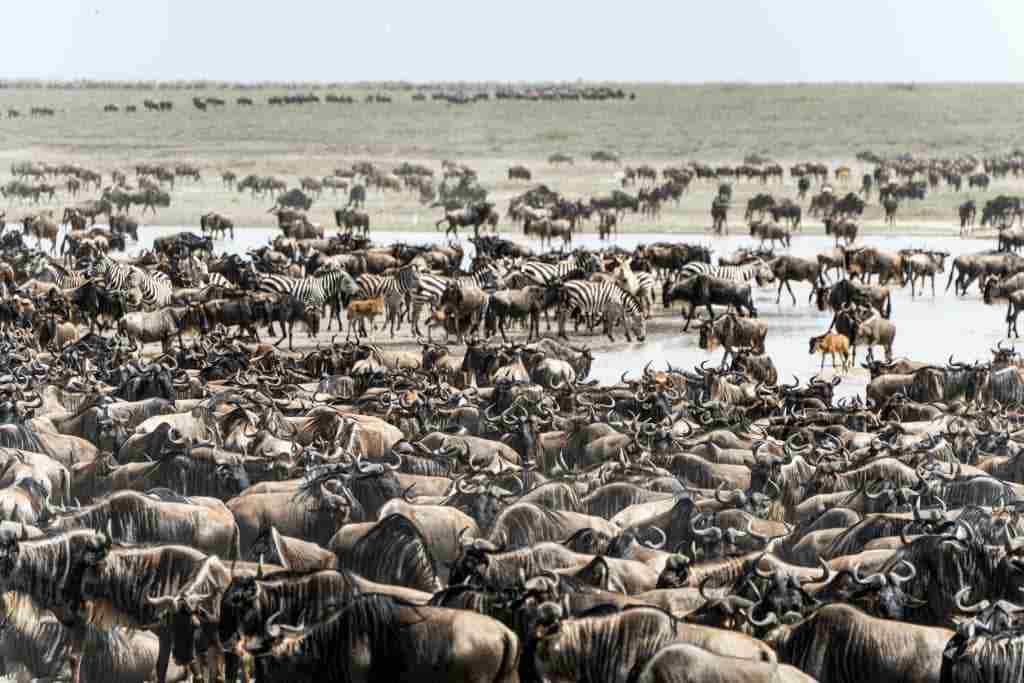

he Great Migration in Tanzania is one of the most extraordinary wildlife spectacles on Earth. Every year, over 1.5 million wildebeest, accompanied by hundreds of thousands of zebras and gazelles, move across the Serengeti ecosystem in search of fresh grazing land and water. This natural phenomenon attracts travelers, photographers, and wildlife lovers from all over the world, making it one of the most searched safari experiences in Africa.
Understanding the best time to see the Great Migration is essential when planning a safari in Tanzania. While the migration happens year-round, each season offers a unique experience depending on animal movement, river crossings, calving season, and predator action.
What Is the Great Migration?
The Great Migration is a continuous, circular movement of wildlife between Serengeti National Park in Tanzania and the Maasai Mara in Kenya. It is driven by rainfall patterns, which determine the availability of fresh grass and water. Unlike other migrations that occur once a year, the Great Migration never truly stops it is always happening somewhere within the Serengeti ecosystem.This natural event is famous not only for the massive herds but also for dramatic predator-prey interactions involving lions, cheetahs, leopards, crocodiles, and hyenas.
Best Time to See the Great Migration in Tanzania
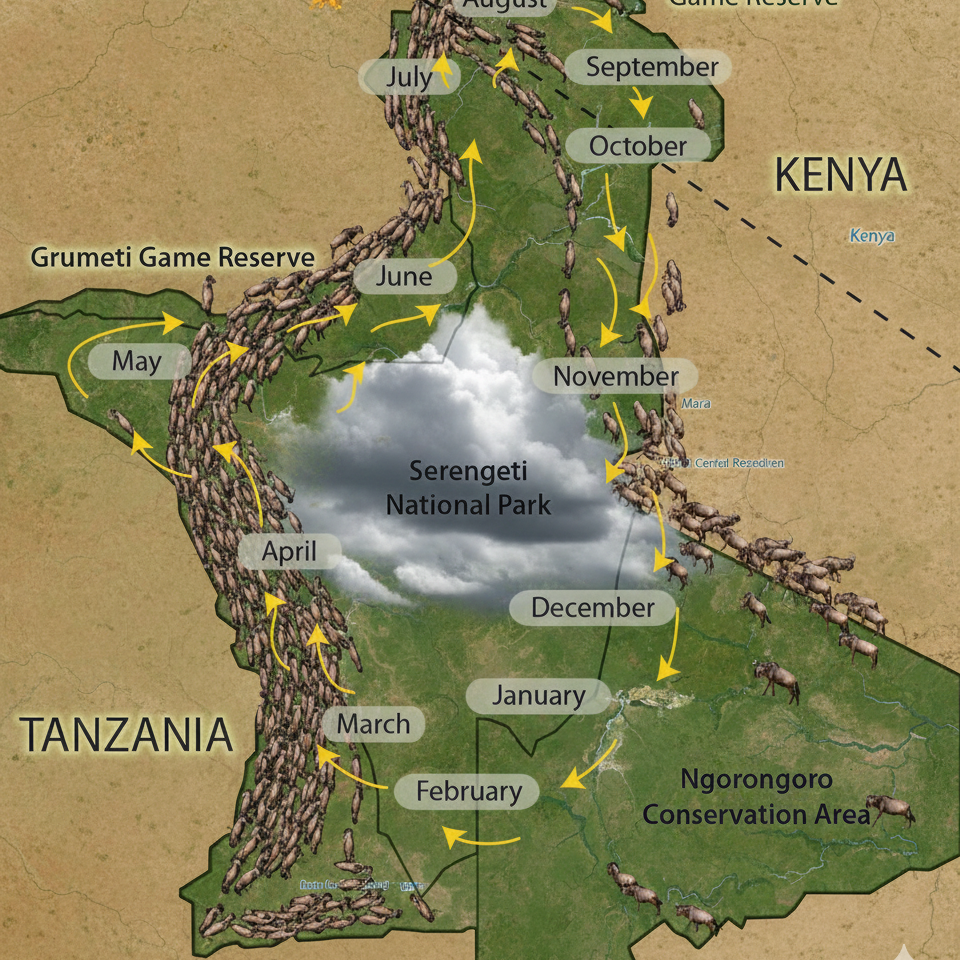
January – February: Southern Serengeti & Ndutu (Calving Area)
At the beginning of the year, the herds are concentrated in the southern Serengeti and Ndutu area, close to the Ngorongoro Conservation Area. This period marks the calving season, when hundreds of thousands of wildebeest give birth. The open plains provide nutrient-rich grass, making it the safest and most productive area for newborn calves. Predator activity is very high during these months.

March: Southern Serengeti Moving West
In March, the herds begin to move slowly westward as the grass in the southern plains starts to dry. The migration is still within the Serengeti ecosystem, and large columns of wildebeest can be seen stretching across the plains. This is a transition period with dramatic skies and excellent wildlife viewing.
April: Central Serengeti
By April, the migration spreads into the central Serengeti. This month falls during the long rains, and the landscape becomes lush and green. The herds continue their journey northward, feeding continuously as they move. Wildlife density remains high, though movements are less predictable due to widespread water availability.
May: Western Serengeti & Grumeti Area
In May, the wildebeest move further west toward the Grumeti Game Reserve. The herds begin to gather in massive numbers, forming long lines as they follow ancient migration routes. This is an important buildup phase before river crossings later in the year.
June: Western Corridor (Grumeti River)
June marks the start of river challenges as the herds reach the Grumeti River. Some crossings occur here, though they are less dramatic than the Mara River. This period signals the end of the rainy season and the beginning of peak safari conditions, with clearer skies and excellent visibility.
July: Northern Serengeti
By July, the migration moves north into the Northern Serengeti, approaching the border with Kenya. The herds begin preparing for the most dangerous part of the journey. Large concentrations of wildebeest can be seen near riverbanks, hesitating before crossing.
August – September: Mara River Crossings (Tanzania & Kenya)
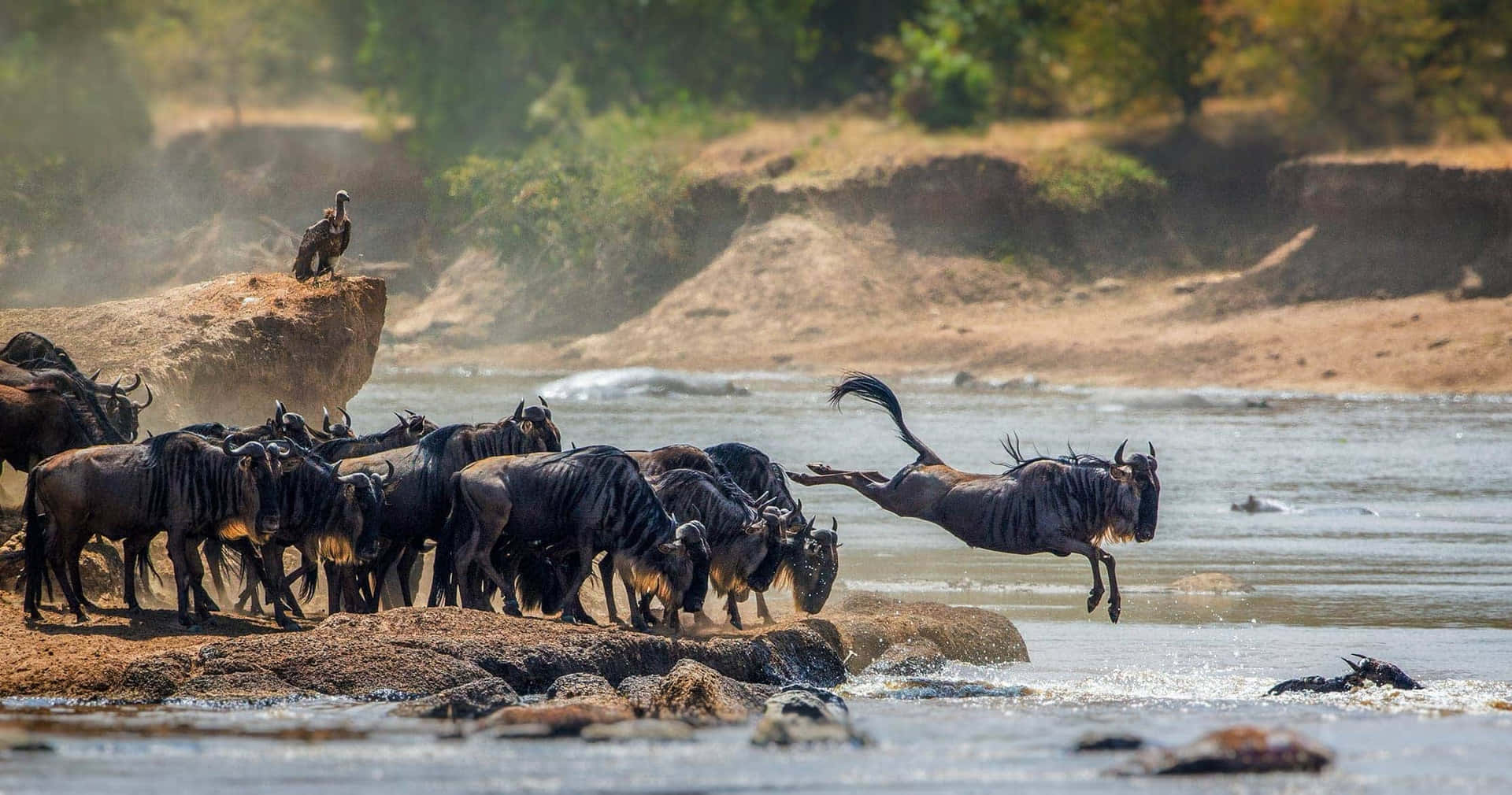
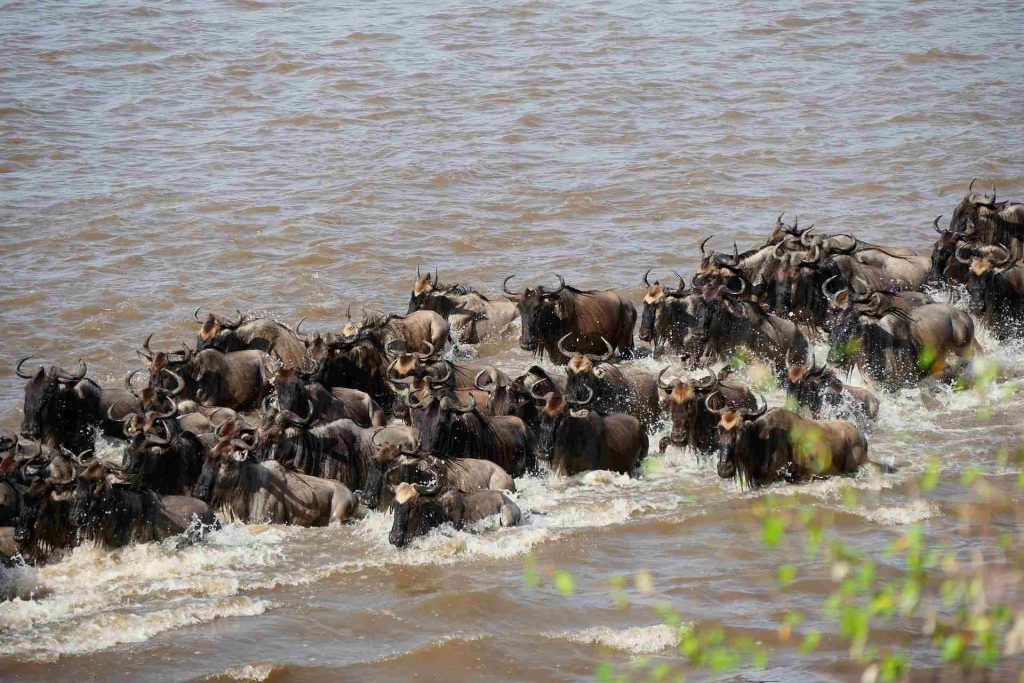
These months represent the most famous stage of the Great Migration. The herds cross the Mara River, moving between the Northern Serengeti (Tanzania) and the Maasai Mara (Kenya). This is when dramatic river crossings occur, with strong currents and crocodiles waiting below. Movements during this time are unpredictable and may happen back and forth across the river.
October: Northern Serengeti (Return South Begins)
In October, the herds begin to drift southward, remaining mostly in the Northern Serengeti. Grass conditions start changing, signaling the gradual return toward Tanzania’s central plains. Wildlife viewing is still excellent, with fewer crowds than peak months.
November: Central Serengeti
Short rains begin in November, triggering the herds to move back through the central Serengeti. The migration spreads out again as fresh grass becomes widely available. This is a beautiful season with green landscapes and active wildlife.
December: Southern Serengeti (Cycle Completes)
By December, the wildebeest return to the southern Serengeti and Ndutu, completing the annual migration cycle. The herds settle in preparation for the upcoming calving season, ready to begin the journey again in January.
Summary of Migration by Month (Quick Reference)
- Jan – Feb: Southern Serengeti & Ndutu (Calving)
- Mar: Southern Serengeti → West
- Apr: Central Serengeti
- May – Jun: Western Serengeti & Grumeti
- Jul: Northern Serengeti
- Aug – Sep: Mara River crossings (Tanzania & Kenya)
- Oct: Northern Serengeti
- Nov: Central Serengeti
- Dec: Southern Serengeti
Best Places to See the Great Migration in Tanzania
- Southern Serengeti & Ndutu – Calving season
- Central Serengeti – Movement and predator action
- Western Serengeti (Grumeti) – Early river crossings
- Northern Serengeti (Mara River) – Famous river crossings
Plan Your Great Migration Safari in Tanzania
A well-planned Great Migration safari in Tanzania ensures you are in the right place at the right time. Choosing experienced local safari operators, flexible itineraries, and knowledgeable guides greatly increases your chances of witnessing key migration moments.
Whether you dream of seeing thousands of wildebeest on open plains or dramatic river crossings, Tanzania offers the most authentic and immersive Great Migration experience in Africa.